


What Does Microneedling Do for Your Face? SkinPen Results, Aftercare, and Cost in Pinetop, AZ

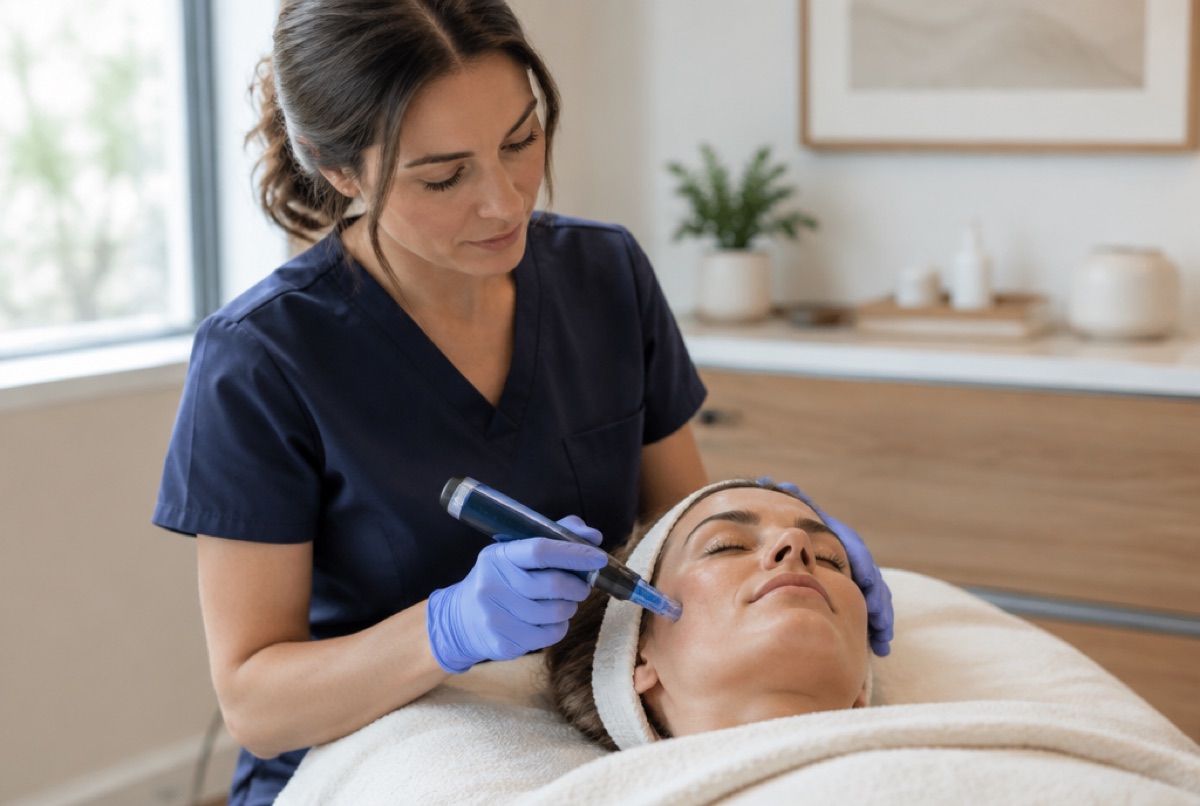
Microneedling is a collagen-induction treatment. A device with very fine sterile needles creates thousands of controlled micro-channels in the skin, and your body responds by producing new collagen and elastin. Over the following weeks that new collagen smooths texture, softens fine lines, shrinks the look of pores, and makes acne scars shallower. In plain terms: microneedling does not add anything to your face. It prompts your skin to repair itself better than it would on its own.
It is also one of the most searched skin treatments in Arizona right now. Google searches for microneedling in Arizona held strong all year, and the fastest-rising questions were practical ones: "what does microneedling do for your face," "how long after microneedling can I work out," "when can I wear makeup after microneedling," and "microchanneling vs microneedling." This guide answers each of them, from the team at Opal Aesthetics in Pinetop and Snowflake.
What Does Microneedling Do for Your Face?
Microneedling treats concerns that live in the skin's structure rather than on its surface. The most common reasons our White Mountains patients book SkinPen microneedling are:
- Acne scars. Rolling and boxcar scars respond especially well over a series. Deep ice pick scars improve, but usually need more sessions. See our acne scar treatments.
- Fine lines and early wrinkles. Around the eyes, the upper lip, and across the forehead, where collagen thins first.
- Rough or uneven texture. The leathery feel that years of high-altitude sun leave behind.
- Enlarged pores. Firmer surrounding collagen makes pores look smaller.
- Dull skin. Faster cell turnover brings back a healthier glow. See dull skin.
- Stretch marks and surgical scars. "Microneedling for stretch marks" was one of the fastest-rising searches this year. It works best on newer, pink or red marks, and older silver marks soften more slowly.
What microneedling does not do: it will not replace lost volume (that is filler or Sculptra), it will not relax expression lines the way Botox does, and it is not the best first choice for distinct brown sun spots, which usually respond faster to IPL.
How Microneedling Works
Your skin treats each micro-channel as a tiny wound. That triggers the normal healing cascade: inflammation, then new tissue formation, then remodeling. During the remodeling phase, which runs for months, fibroblasts lay down fresh collagen types I and III. That is why microneedling results build gradually rather than showing up the next morning.
At Opal we use SkinPen, the first microneedling device cleared by the FDA. Needle depth is adjusted zone by zone, shallower on the forehead and around the eyes and deeper over cheek scarring. A typical session takes about an hour including numbing time.
Microneedling with PRP or growth factors
The micro-channels also make the skin briefly more receptive to what is applied on top. Many patients pair SkinPen with platelet-rich plasma (PRP), drawn from your own blood, or with topical PDGF growth factors or AriEssence PDGF. The goal is a stronger healing signal and, for many patients, a smoother recovery. These add-ons are optional and we will tell you honestly whether they make sense for your concern.
Microchanneling vs Microneedling: What Is the Difference?
"Microchanneling vs microneedling" was a breakout search in Arizona this year, and the terms cause real confusion. Both create tiny channels in the skin. The difference is depth and intent:
- Microneedling (like SkinPen) reaches into the dermis, roughly 0.5 to 2.5 mm depending on the area, to deliberately trigger collagen remodeling. It is a medical treatment best suited to scars, texture, and lines.
- Microchanneling usually refers to very shallow stamping, often well under 0.5 mm, mainly to help serums absorb. It is gentler, with little downtime, but it produces far less collagen stimulation.
If your goal is visible scar or texture improvement, true medical microneedling is the tool that does that job.
SkinPen vs RF Microneedling
Radiofrequency (RF) microneedling, another rising search, adds heat through insulated needles to tighten deeper tissue. It can help with laxity, but it typically costs more, can involve more downtime, and carries more risk of pigment problems in some skin types. Standard SkinPen microneedling remains the workhorse for acne scars, texture, and fine lines, and it is safe across a wide range of skin tones. For patients whose main concern is skin laxity or deeper resurfacing, we often plan Alma Harmony erbium resurfacing or ClearLift alongside or instead of microneedling.
How Many Sessions Will I Need, and When Will I See Results?
- General rejuvenation and glow: 3 sessions, about 4 to 6 weeks apart.
- Acne scars or stretch marks: 3 to 6 sessions, spaced 4 to 6 weeks apart.
- Maintenance: 1 to 2 sessions a year once you reach your goal.
Most people notice brighter, smoother skin within 1 to 2 weeks of the first session. Structural change from new collagen shows up gradually from about 6 weeks and keeps improving for 3 to 6 months after the final session.
Microneedling Aftercare: Makeup, Workouts, and Sun
These were the most-searched aftercare questions this year. Here is the timeline we give our patients.
When can I wear makeup after microneedling?
Wait at least 24 hours. The channels are open for roughly the first day, and makeup, especially from a used brush or sponge, can introduce bacteria and irritate healing skin. After 24 hours, a clean mineral makeup applied with fresh tools is usually fine.
How long after microneedling can I work out?
Skip the gym, hot yoga, saunas, and anything that makes you sweat heavily for 48 to 72 hours. Sweat and heat increase redness and irritation while the skin is healing. A gentle walk the next day is fine.
What else should I avoid?
- Retinoids, acids (AHA, BHA), vitamin C serums, and scrubs for about 5 to 7 days.
- Pools, hot tubs, and lake swimming for 72 hours.
- Direct sun for at least a week, and daily mineral SPF 30 or higher afterward. At 7,000 feet in Pinetop, UV is noticeably stronger than in Phoenix, so this matters more here than almost anywhere.
What does recovery look like?
Expect redness similar to a mild sunburn for 1 to 3 days, some tightness, and light flaking around days 3 to 5. Most patients return to work the next day.
Who Should Not Get Microneedling?
We postpone treatment for anyone with active acne breakouts, cold sores, eczema, or infection in the treatment area, and for patients who are pregnant. People who have used isotretinoin (Accutane) recently, or who have a history of keloid scarring, need an individual medical assessment first. This is why every first visit at Opal starts with a consultation.
How Much Does Microneedling Cost?
Across the U.S., a single medical microneedling session commonly runs about $200 to $700, depending on the area treated, the region, and whether PRP or growth factors are added. Packages of three are usually the best value because results come from the series, not a single visit. Opal offers microneedling within several treatment packages and membership options, and you will get an exact quote at your consultation.
Frequently Asked Questions
Does microneedling hurt?
We apply a topical numbing cream for about 20 to 30 minutes first. Most patients describe the treatment as a light vibrating or scratching sensation, more noticeable over bony areas like the forehead.
Is microneedling safe for darker skin tones?
Yes. Because SkinPen uses no heat or light, it carries a low risk of pigment changes and is a good option for many skin types that are not ideal candidates for some lasers.
Can I do microneedling at home?
At-home rollers are much shallower and harder to keep sterile. They can irritate the barrier without producing meaningful collagen. For scars and texture, medical microneedling is a different treatment altogether.
How long do microneedling results last?
The collagen you build is your own and lasts, but natural aging and sun exposure keep breaking collagen down. One or two maintenance sessions a year plus daily sunscreen keep results going.
Is microneedling or a chemical peel better?
They do different jobs. Chemical peels work on the surface for tone, pigment, and glow. Microneedling works deeper for scars, texture, and lines. Many treatment plans use both, spaced a few weeks apart.
Microneedling in Pinetop and Snowflake, AZ
Opal Aesthetics offers SkinPen microneedling, with optional PRP and growth factor protocols, at both White Mountains locations. Treatments are performed under the medical direction of Dr. Cara Slater, with owner and nurse injector Caroline Johnson, RN, BSN, overseeing treatment planning.
- Pinetop: 1400 E White Mountain Blvd #101, Pinetop, AZ 85935
- Snowflake: 501 S Main Street, Snowflake, AZ 85937
- Phone: (928) 270-2327
Ready to find out whether microneedling is right for your skin? Book a consultation or call (928) 270-2327.
Read More Blogs!
Stay updated with the latest blog posts and engage with our community.

